
Document
Document
Nom du fichier
Likweli: A remarkable new species of Colobus monkey from the Lomami National Park, Democratic Republic of CongoType de fichier
Document PDFTaille du fichier
4,22 MBDate de création
2026 juil. 20Date de mise à jour
2026 juil. 20Publié le
2026 juil. 15Les ODD


Domaines thématiques
TaxonomieBiodiversité des forêtsDocument Types
AricleLikweli: A remarkable new species of Colobus monkey from the Lomami National Park, Democratic Republic of Congo
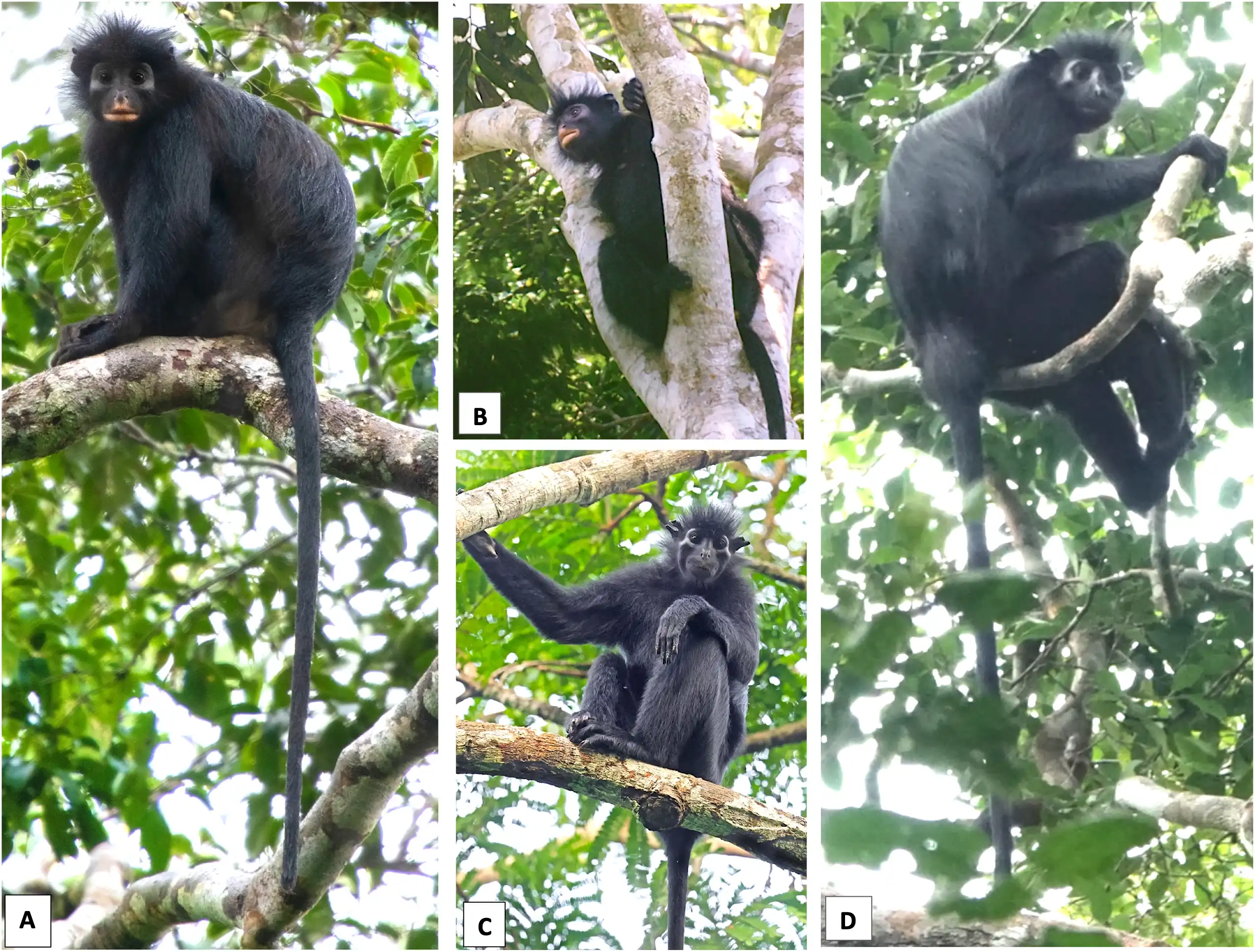
We describe and name a new species of African monkey, Colobus congoensis sp. nov. (Primates, Cercopithecidae), from the interfluve region of the Lomami and Congo (Lualaba) Rivers in east-central Democratic Republic of Congo (DRC). Colobus congoensis is a rare and cryptic monkey, poorly known even by local communities bordering its range, some of whom use the vernacular name Likweli for the species. Between 2018 and 2022, 114 field observations were made over an estimated range of 1,700 km2. Colobus congoensis is largely restricted to high, closed canopy forest on deep clay pediments and islands of terra firme forest, where it co-occurs with two other colobine species (Piliocolobus parmentieri and Colobus angolensis). Colobus congoensis was most frequently observed in small groups (mean = 6.2 individuals), often in mixed-species associations. Mitochondrial and morphological data confirm the attribution of C. congoensis to the genus Colobus and reveal that it is the sister to Colobus satanas, from which it is geographically separated by more than 1,200 km. Comparative analysis of C. congoensis vocalizations also reveals structural similarities with C. satanas to the exclusion of other Colobus species. Among other features, C. congoensis is distinguished from C. satanas and other Colobus species by its small size, a striking orange cream patch surrounding the mouth, philtrum, and portions of the inferior nasal alae on an otherwise black face, and a white perianal patch that is covered with fine white hairs in males and is glabrous in females. We propose a preliminary IUCN Red List classification of Endangered (EN) for C. congoensis based on its small range area and population size, coupled with the projected impact of increased hunting pressure and habitat conversion. Protection of Lomami National Park, within which most of the C. congoensis range occurs, and engagement of local communities in not hunting the species are the most important actions needed to ensure the conservation of C. congoensis.
Auteurs: Hart JA, Amboko JD, Arenson JL, Horton ER, Coates KF, Kapale J-PI, et al. (2026)
Publié le
2026 juil. 15Les ODD